Clothing Support Should Extend Beyond the Interview
The interview outfit did its job. The clothes fit well, and the shoes made it through the commute without causing a blister. Then the phone call comes: You got the job.
That moment deserves to be celebrated. It also brings a new question that employment programs don’t always ask: What will you wear on Monday? And Tuesday? What happens when the one interview outfit is waiting to be washed, the office is colder than expected or the job requires more walking than the shoes can handle?
Job interview clothing can help a woman make a strong first impression, but employment doesn’t end after the interview. A new job creates an ongoing need for clothing that works through the commute and remains comfortable during a full shift. Clothing support after an interview helps her build a workplace wardrobe she can depend on as she learns the job.
The Job Offer Is the Beginning, Not the Finish Line
Many clothing programs are designed around a single milestone: the interview. That makes sense because the interview is visible, immediate and easy to prepare for. Yet the days after someone is hired are where clothing needs become more specific.
An interview outfit may be more formal than the workplace. A woman who interviewed in a blazer could learn that her new office is business casual. A retail position may require black clothing and shoes that remain comfortable while standing. A warehouse job may have safety requirements. A training program may begin in a classroom, then move to a worksite with completely different expectations.
Without clear information, it’s easy to spend limited money on clothing that looks professional but doesn’t work for the actual job. Professional clothing support should include help understanding what the employer expects, how the workday feels and which clothes can handle repeated wear.
Before buying or accepting more clothing, ask direct questions. Is there a written dress code? Are jeans allowed? Does the workplace require closed-toe shoes? Will the day involve sitting, lifting or moving between indoor and outdoor spaces? These questions aren’t signs that someone is unprepared. They’re part of preparing well.
One Outfit Can’t Carry an Entire Workweek
The first week often comes with pressure to look consistent while learning unfamiliar systems and new responsibilities. Worrying about whether a shirt is clean or a waistband will remain comfortable for eight hours takes attention away from the job itself.
A useful work rotation doesn’t have to be large. It needs enough flexibility to get from one laundry day to the next. Start with the clothes that meet the dress code and feel comfortable for the longest shift. Lay them out where you can see them, then test which pieces work together. The goal is to create several combinations without making every morning feel like a new puzzle.
Try the full outfit before the first day, including shoes and undergarments. Sit down for several minutes. Reach forward as though you’re working at a desk or register. Walk around the room. If the shirt pulls, the pants slide or the shoes begin to hurt after ten minutes, the problem is likely to feel worse several hours into a shift.
Take a photo of each outfit that works. On a rushed morning, those pictures become a quick reference. They can also reveal whether one piece only works with a single outfit or can be combined in several ways. This isn’t about creating a perfect capsule wardrobe. It’s about knowing that clean, appropriate clothing is available when the alarm goes off.
The Commute Is Part of the Outfit
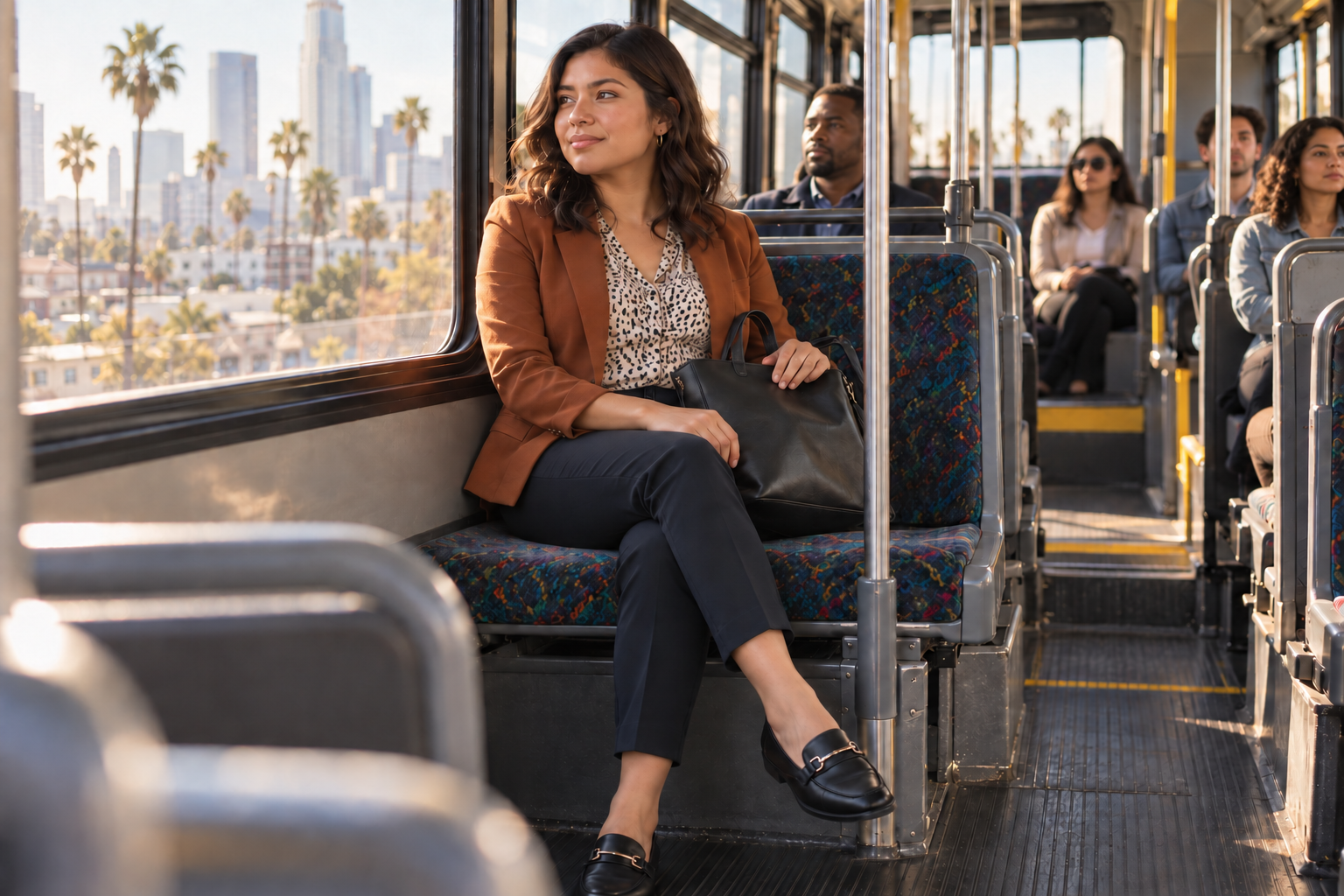
Work clothes for women are often discussed as if everyone steps out of a car and walks directly into a climate-controlled office. In Los Angeles, a commute may include a long walk, two buses or a train platform in full sun. The clothing has to work before the shift begins and after it ends.
Shoes deserve particular attention. A pair that feels fine during a short interview may not work for a commute followed by hours on the job. If the workplace allows it, wear supportive shoes while traveling and change after arrival. Keep the work shoes protected in a simple bag so they don’t get damaged along the way.
Layers also matter because Los Angeles temperatures can change across one day. A lightweight sweater or jacket can help with a cold office without becoming a burden during the trip home. Choose a layer that works with more than one outfit so it earns its place in a limited workplace wardrobe.
Carry only what the day requires. Overloading a bag can pull on clothing and make a long commute harder. A small personal-care pouch can help with quick adjustments after travel. The best work bag is one you can manage comfortably every day.
Laundry Is Part of Clothing Support
It’s easy to recommend a weekly outfit rotation without asking whether someone has regular access to a washer, dryer or safe place to hang clothing. Employment clothing assistance becomes much more useful when laundry is part of the planning.
Check care labels before choosing work clothes. A dry-clean-only blouse may be beautiful, but the cleaning cost can make it difficult to wear regularly. Fabrics that can be washed at home or at a laundromat are often easier to keep in rotation. Darker colors can be forgiving between washes, though every item still needs to be cleaned according to how it’s worn.
Create a realistic laundry plan based on access, not an ideal schedule. If laundry happens every ten days, the clothing rotation has to last that long. If uniforms must be washed after every shift, an extra uniform may be more valuable than another pair of dress pants. Community organizations can help by asking about laundry early and including laundromat funds or detergent among employment-related resources.
When possible, keep one complete work outfit clean and set aside. That outfit is for the morning when a spill happens, the washer is unavailable or the week changes without warning. A backup removes one small crisis from a day that may carry several others.
The Workplace Wardrobe Changes With the Job
The clothing that works during orientation may not meet every need that follows. Schedules change. Responsibilities expand. A new employee may begin attending meetings or visiting another location. Seasonal temperatures also affect the commute and work environment.
That’s why clothing support after an interview should include follow-up. After the first week, a woman knows far more about what she needs. She can identify whether the dress code was explained accurately, whether her shoes work for the shift and which pieces she reaches for most often. A check-in at that point is more useful than guessing everything before the job begins.
Women can conduct their own check-in too. At the end of the first week, look at what was worn and what stayed untouched. Notice which outfits made the day easier. Write down the specific gap that caused stress. The answer may be another washable top, a warmer layer or shoes with better support. A clear need is easier to address than the broad feeling of needing an entirely new wardrobe.
Community Support Should Follow the Woman, Not the Milestone
Employment services often measure success at the moment someone completes training, attends an interview or accepts a job. Those achievements matter, but the woman still has to arrive on time, meet workplace expectations and manage the costs that come before the first paycheck.
Clothing resources for women should reflect that reality. Partner organizations can build follow-up into employment services by checking in after hiring, offering clothing appointments once the dress code is known and providing small funds for required shoes or uniforms. They can also refer women to organizations with professional styling expertise instead of relying only on general clothing distribution.
Well Dressed brings clothing education and professional styling to women throughout Los Angeles County. The work goes beyond handing someone an outfit. Women learn how clothing fits into the life they’re living, how to recognize what supports a full day and how to make choices they can use again. That education allows donated clothing to become part of a functional wardrobe rather than a collection of unrelated pieces.
For community partners, clothing support strengthens services that are already in place. A workforce program may prepare a woman for the interview. A case manager may help her gather documents and reach the appointment. Well Dressed addresses the part that can be easy to overlook: what she needs to wear once the opportunity becomes part of her daily life.
Getting the Job Shouldn’t End the Support
An interview outfit represents possibility. A reliable workplace wardrobe supports what happens when that possibility becomes a schedule, a commute and a paycheck that hasn’t arrived yet.
The most useful question isn’t simply, “Do you have something to wear to the interview?” It’s also, “Will your clothing continue to work once you’re hired?” Asking both questions changes clothing assistance from a one-day solution into support that reflects the full experience of beginning a job.
Women deserve to enter the workplace with clothing that helps them concentrate on learning, contributing and settling into a new routine. When community organizations treat professional clothing support as part of employment services, they remove a barrier that may look small from the outside but is felt every morning in front of the closet.